Visualization Techniques for Stroke Rehabilitation
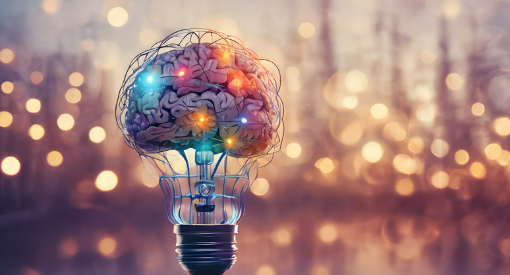
Visualization can be a helpful tool during stroke recovery. By mentally practicing movements, it may help improve arm and upper extremity motor control, walking, and/or balance.
How does visualization work:
Different visualization techniques are designed to activate different regions of the cerebral cortex, with the goal of promoting neural activity and supporting the formation of new synaptic connections.
For example, visual imagery primarily engages the occipital cortex, kinesthetic imagery activates sensorimotor and motor cortical regions, and guided verbal imagery engages language-related regions, including Broca’s area, as well as the prefrontal cortex.
Because individuals respond differently to various visualization techniques, it is important to identify the approach that is most effective for the individual based on their specific needs, abilities, and neurological deficits.
Types of Imagery Techniques
Visual Imagery: Imagine watching your affected limb perform a specific functional task, such as reaching for or picking up an object.
Guided Verbal Imagery: Follow a structured verbal script that guides you through the movement while focusing on details such as speed, force, and direction.
Kinesthetic Imagery: Focus on the feeling of movement and body position. A therapist may passively move the affected limb while you concentrate on what the movement feels like.
Technology-Assisted Imagery: Use technology such as virtual reality (VR), augmented reality (AR), robotics, or biofeedback to provide visual or sensory feedback that supports movement practice.
Motor Imagery: Imagine actively moving your affected limb without actually moving it, mentally rehearsing the movement as if you were performing it.
Resources:
Calderone A, Manuli A, Arcadi FA, Militi A, Cammaroto S, Maggio MG, Pizzocaro S, Quartarone A, De Nunzio AM, Calabrò RS. The Impact of Visualization on Stroke Rehabilitation in Adults: A Systematic Review of Randomized Controlled Trials on Guided and Motor Imagery. Biomedicines. 2025 Mar 1;13(3):599. doi: 10.3390/biomedicines13030599. PMID: 40149575; PMCID: PMC11940390.