Forced Use Therapy for Upper Extremity-Stroke Rehabilitation
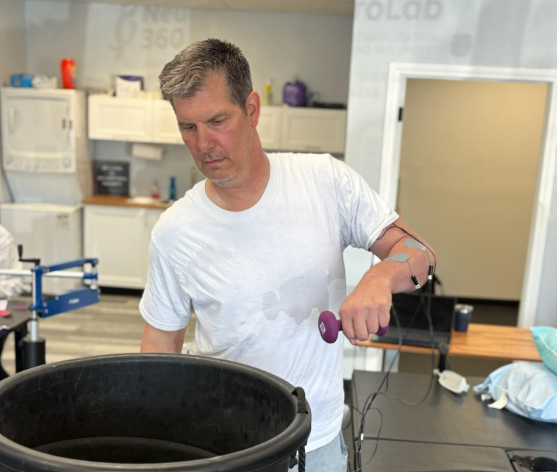
After a stroke, many individuals experience weakness or decreased function in one arm. Over time, it becomes natural to rely more heavily on the stronger arm while avoiding use of the affected side. This pattern, known as “learned non-use,” can limit recovery and reduce functional independence.
Fortunately, rehabilitation techniques such as Forced Use Therapy and Bimanual Training are designed to help individuals regain strength, coordination, and confidence in using their affected upper extremity.
What Is Forced Use Therapy?
Forced Use Therapy, often referred to as Constraint-Induced Movement Therapy (CIMT), encourages active use of the affected arm by limiting reliance on the stronger arm during functional activities.
The goal is to promote neuroplasticity, the brain’s ability to reorganize and form new neural connections, by repeatedly practicing tasks with the affected limb. Through consistent repetition and purposeful movement, the brain can relearn motor patterns and improve arm function.
Examples of Forced Use Activities
Eating with one hand
Drinking from a cup
Picking up household objects
Reaching tasks
One-handed self-care activities
One-handed cooking tasks
What Is Bimanual Training?
Bimanual Training focuses on using both arms together during functional activities. These exercises encourage symmetrical movement patterns and help activate motor coordination between both upper extremities.
Because many daily tasks naturally require two hands, bimanual training can improve real-world function and coordination.
Examples of Bimanual Activities
Folding laundry
Holding a tray
Opening a jar
Washing hands
Holding a ball
Dancing or rhythmic movement activities
Benefits and Challenges of Forced Use Therapy
Pros
Encourages active use of the affected limb
Helps overcome learned non-use
Can significantly improve motor control and strength
Promotes independence in daily activities
Cons
Requires some active movement to already be present
Can be physically and mentally tiring
May not be appropriate for individuals with severe weakness
Benefits and Challenges of Bimanual Training
Pros
Improves coordination between both arms
Closely resembles everyday activities
Can be appropriate for individuals with more severe weakness
Encourages functional participation
Cons
The stronger arm may compensate too much
The affected arm may not be challenged as intensely as during forced-use therapy
Which Approach Is Best?
Both Forced Use Therapy and Bimanual Training can play an important role in stroke rehabilitation. The most appropriate approach depends on the individual’s strength, motor control, goals, and stage of recovery.
At NeuroLab 360, therapy interventions are individualized to each client to maximize recovery, independence, and participation in meaningful daily activities. Combining evidence-based treatment techniques with functional training helps patients build confidence and improve upper extremity function in real-life situations.
Recovery after stroke is a journey, and consistent practice, repetition, and support can make a significant difference in regaining independence.